#saverodinipark The crowdfunding
click here and go to our indiegogo page
 In modern civilization, parks are recreational areas, as natural shelters of people living in an urban environment. But this was not always their only use, as the park’s function has changed, depending on the cultures.
Rhodes, as one of the first cities to be inaugurated and planned with an organized urban planning system, has been displaying a park of more than two thousand years of continuous use and life. The fate of Rodini Park is connected with the extremely rich multicultural activity of the city of Rhodes, receives influences and features of all the cultures that shaped the image of the capital of the island.
 click here and go to our indiegogo page
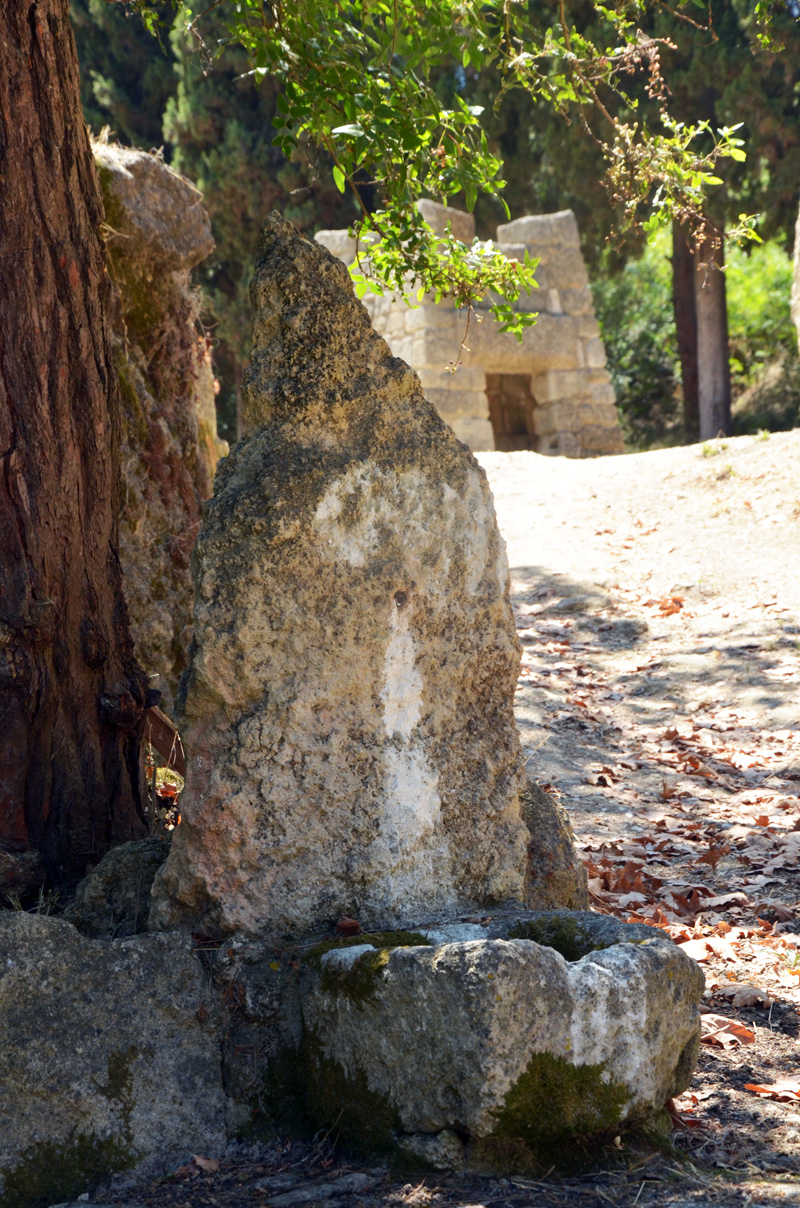 Starting from the founding of the city in 408BC … The green area of the Rodini stream is included in the city plan and constitutes the natural boundary of Rhodes, combined with man-made boundaries: the walls and the necropolis. For the ancient Greek pagans, “animists” Natural wealth has a divine status and therefore does not accept human interference or exploitation. The holy groves reflect this belief. In all sanctuaries nature plays a primary role, while architectural interventions serve practical purposes and are optional elements. The religious significance of Rodini, as a space of spirituality, is confirmed by the formation of the nympheas from the Hellenistic period at least, dedicated to the protectors of Nature and its elements: Naiades, Yades, Amadryades, Oreades, Nereids and other. In the upper part of the park, the dialogue with the other world is oriented towards the ancestors, with a multitude of monumental tombs, among them so-called Ptolemaion (conventional name). With the nympheas and the funerary monuments, the artistic production in the park, wich will be a model, begins with the name “Rhodian Park” for the parks where natural beauty is complemented by human expression through art.
 Because the contact with the nature favors spirituality, the great masters of the era begin to avoid the bustling arcades and markets of the centers, preferring to browse, undisturbed near the divine creation, the natural environment: it is the birth of the peripatetic schools. A peripatetic school establishes in Rhodes a student of Aristotle: Eudimos. It is also said that among the first to teach in Rodini is the orator Eshchinis (end of 4th BC) who came to Rhodes is a cosmopolitan capital that attracts representatives of philosophy, arts and sciences from the four corners of the Greek-Roman world. The great painter Protogenis (the only competitor worthy of Apelles), the astronomer Hipparchus (calculated solar year and distance Earth-Moon), the writer of the “Argonauts” Apollonius the Rhodian (born in Egypt) are few of the many of prominent ones that will make of Rhodes a center of culture and education. Among other students, Cicero, Julius Caesar, Cassius and Markus Antonius will come and take pride in passing the Rhodes faculties that provide the skills and prestige necessary for their political career. Favorable living conditions, the political neutrality of the island, which left great freedom of expression and high fees, attracted all those who formed the reputation of the island as a center of art and spirit at that time. During the Roman era, the combination of religious and spiritual use will be completed, which will continue until the Christian years, when it will become a monastic property. In the year of the Knight’s rule, Rodini gains new glory as the existence of the Grand Master’s villa is mentioned, while the exotism of the park with wild animals and birds impresses all visitors. During the medieval years, the first park of Europe on the nobles’ land are created for their hunts.
  The admirable animals and birds living in the park are sign of prestige for power, something that has continued to our day. The Ottomans, apparently influenced by Arabic sensitivity and aesthetics for the gardens that offer shelter of coolness and tranquility, respect and preserve the park. Some small interventions in the walls and the maintenance of the aqueduct confirm it. The archways of the base with Gothic arches replace a pre-existing Roman aqueduct and support Ottoman additions repaired by the Italians. The Italians, in the context of the program for the exploitation of the natural wealth of the whole island, will intervene decisively, shaping to a large extent the present image of the park.
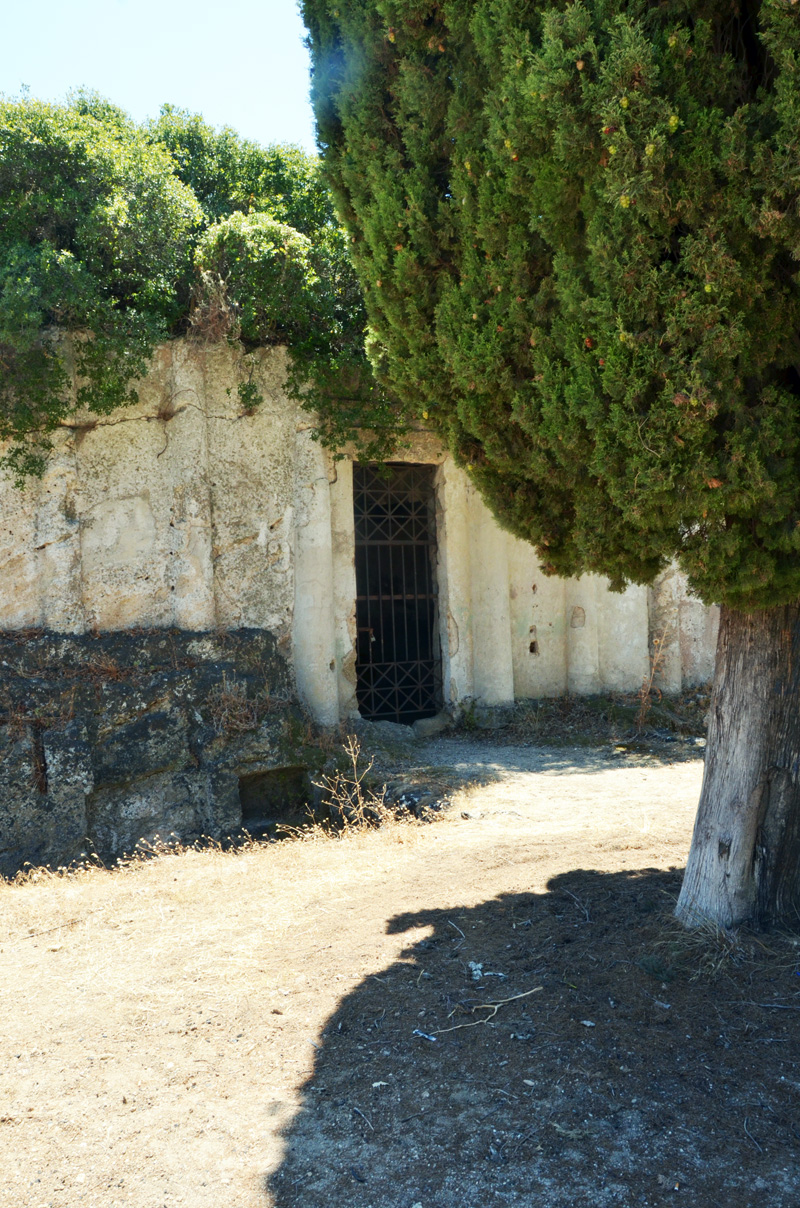 This continuous use of Rodini reflects the collective mentality of every culture that will shape it. Here is the special value of this park that keeps alive the memory of a time when the natural environment is not just a place o recreation but also a spiritual culture and meditation. Dialogue between people, gods and ancestors trough ART that becomes a mean of communication between dimensions in space (material-spiritual) and time. The monuments (memories) of people (toms, nymphs) as landmarks, testify the places and the walks in combination with the vital elements of nature (earth relief, water, vegetation) without which there would be nothing.
Collective responsibility of our own time to decide what will ultimately be our contribution to this millionaire park…
Adrien Bordrez (Tourist guide)
Faithful copy of the flyer currently distributed at the park
Grecia. Symi. Ultima Parte

Symi vista dall’Eviva
La nostra barca Eviva entra nel cuore dell’escursione e nel cuore dell’isola di Symi dove ci appaiono all’improvviso le numerose case color pastello che rendono questo luogo unico nel genere. Come tutte le isole del dodecanneso anche Symi ha subito diverse occupazioni, tra cui quella italiana dal 1923 al 1943 come nel caso di Rodi, ma fortunatamente non ha subito nessuno stravolgimento architettonico.
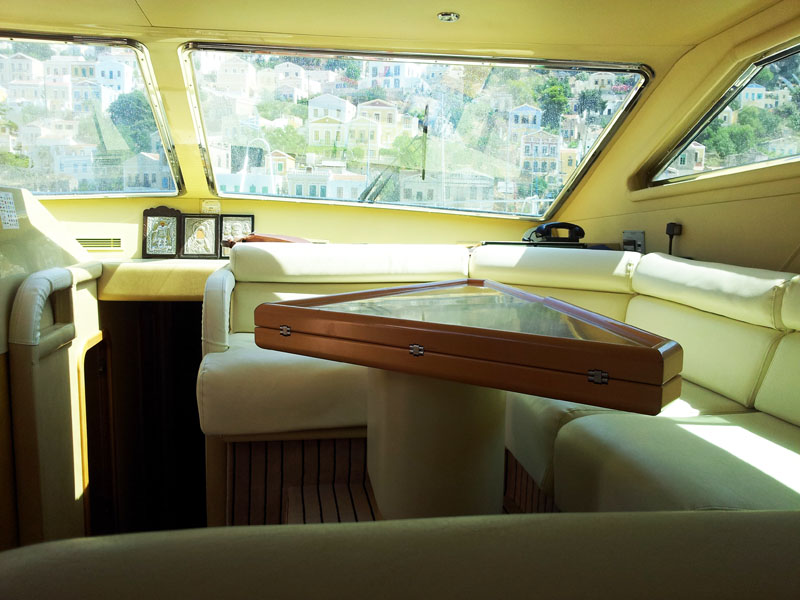
Come un quadro…
Molte case e locali si affacciano direttamente sul porto, con le loro sculture in legno che contribuiscono a dare prestigio all’isola, presenti anche nelle varie chiese e monasteri ulteriormente arricchiti da mosaici.
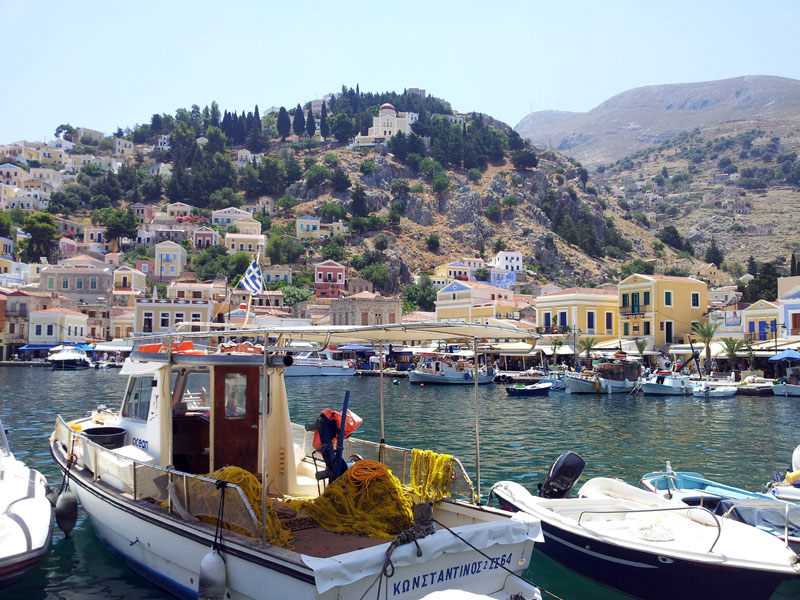
L’attracco al porto è molto suggestivo e subito si nota come effettivamente Symi sia un’isola di pescatori di spugne. Spugne che abbiamo modo di vedere esposte nelle numerose bancarelle che si interpongono tra la banchina e le taverne che recano ancora molte scritte in italiano ma che si stanno trasformando in richiami cirillici. Il turismo non ha simpatie nazionalistiche, parla la lingua di chi porta denaro.

I colori di Symi
La visita della cittadina è piacevolissima ed offre moltissimi scorci pittoreschi tra i vicoli animati da altri turisti attratti dalle vetrine di gioiellerie, spezie o dalle stesse coloratissime taverne.
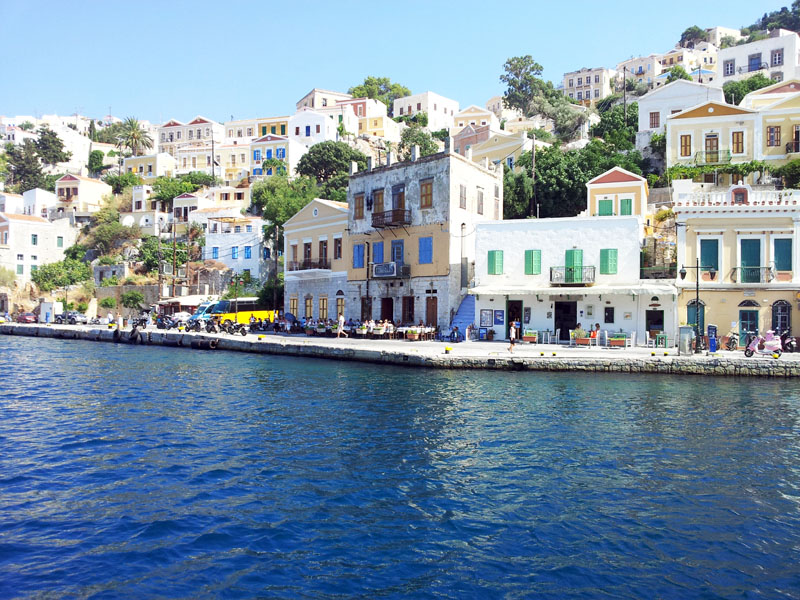
Taverna Pantelis sul mare
Ed è in una di queste, Pantelis, che decido di consumare il mio pranzo; vista la temperatura si limita ad essere un eccellente piatto di verdura, composto da rucola, pomodorini secchi, scaglie di formaggio grana, condito con aceto balsamico, olio di oliva e del miele. Intorno a me vedo persone che sembrano gradire particolarmente l’immancabile koriatiki (insalata greca) ma anche i rinomati ed esclusivi gamberetti di Symi.
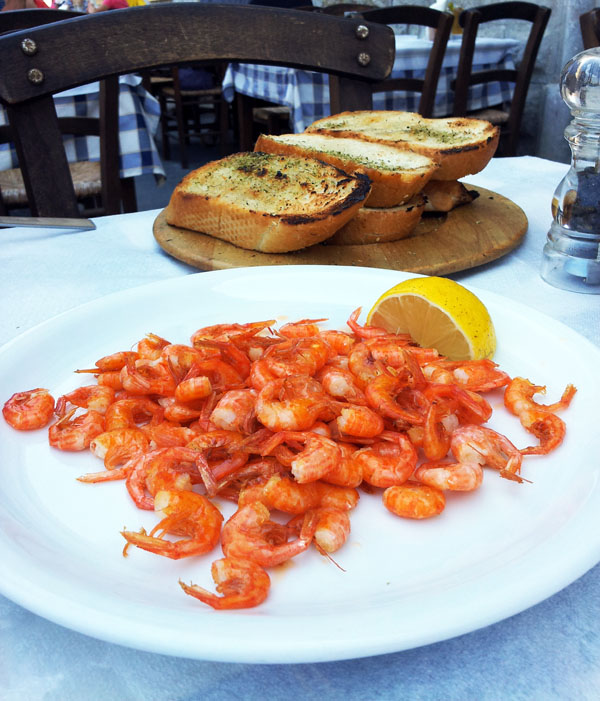
Gamberetti di Symi
Il tutto a pochi metri dal mare, immersi in uno scenario da favola e prezzi decisamente onesti.
Qualcuno starà pensando che in questa terza parte non c’è nessuna traccia di ilarità o presa in giro… Che sarà mai successo a Renato? Ha litigato con la ragazza? Ha il mal di testa post Beach Party? (…altra recensione in arrivo)
La scena ridicola della giornata è gentilmente offerta dalla signorona russa di turno che, colpita da una ingenerosa raffica di vento, si lascia volare il cappello da diva in un angolo del porto adibito ad ospitare delle paperelle, che forse per il caldo, forse incuriosite dalla scena, rimangono immobili raggruppate ad assistere al recupero del largo cappello bianco. La signora non ci pensa due volte e con profuso impegno scavalca le recinzioni fino a trovarsi a pochi metri dalla vasca delle papere che rimangono senza starnazzi dinanzi alla scena. Non rimane invece impassibile un commerciante di spugne che, richiamata la signora ad uscire da quello che a mio avviso era il suo habitat naturale, ha ripescato il cappello munito di amo e lenza dopo alcuni tentativi andati a vuoto che avevano mandato la sciura nello sconforto più totale. Tutto è bene quel che finisce bene e così la comunità intera ha potuto tirare un sospiro di sollievo nel rivedere sulla testa della signora il cappello bianco da 8 euro afflosciato e sgocciolante.
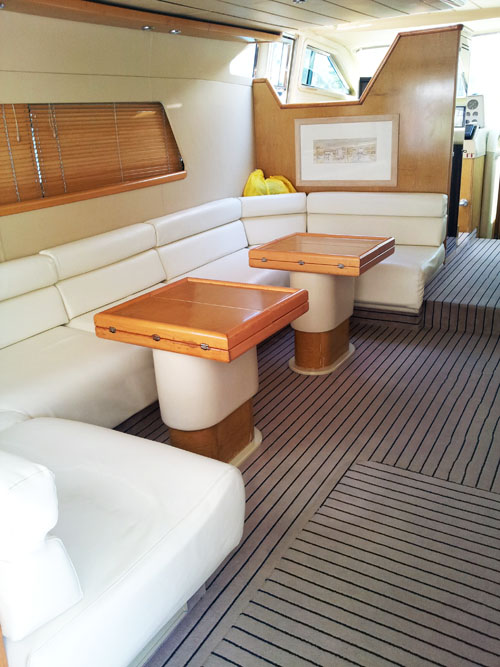
tea time sull’Eviva
Dopo queste perle turistiche non mi rimane altro che far passare il mio tempo bevendo un tè a poppa della nostra Eviva dignitosamente ormeggiata e godermi gli ultimi momenti di quella bellissima ed intensa giornata che da lì a poco si sarebbe conclusa. Salpiamo dal delizioso porto di Symi indirizzando la prua verso Rodi, ma con lo sguardo ancorato fino all’ultimo riflesso che il panorama di Chora ci offre. (Renato)
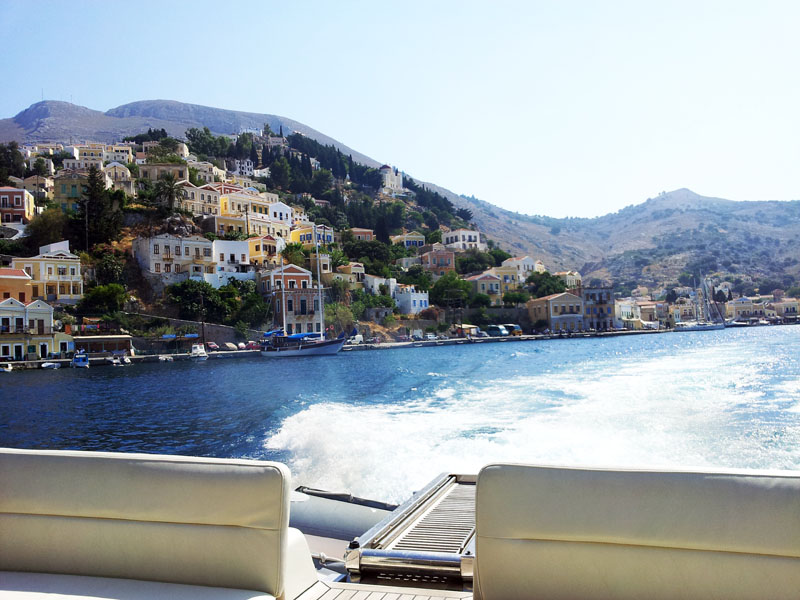
Ultimi scorci di Symi
http://www.evivacruiser.gr info@evivacruiser.gr 0030 6947 121746


 controviaggio.com